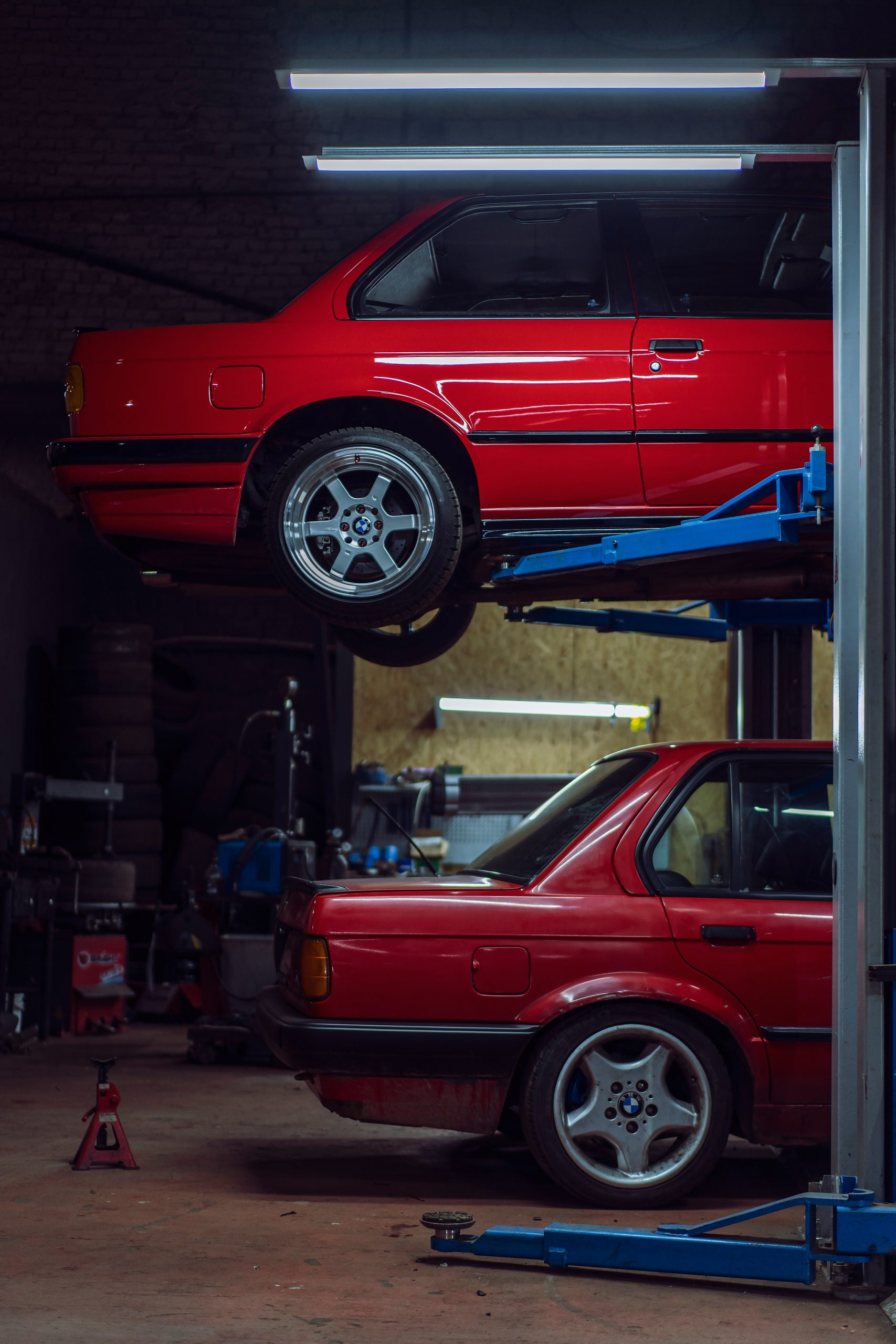
Finding enough room for car parking is becoming a familiar challenge across residential, commercial and mixed-use developments. As sites become tighter and vehicle numbers remain high, developers and property owners are looking beyond traditional side-by-side parking layouts.
One increasingly popular answer is the double car stacker: a space-efficient system that allows one vehicle to be parked above another. By using vertical space, these systems can significantly increase parking capacity without requiring a larger building footprint.
So, what is driving the growing interest in double car stackers?
They make better use of limited space
The clearest advantage of a double car stacker is its ability to accommodate two vehicles within approximately the footprint of one conventional parking space.
This can be particularly valuable in densely developed areas where land is limited or expensive. Rather than sacrificing valuable floor area to create more parking bays, a developer can look upwards and use the available vertical space.
Double car stackers can be considered for apartment buildings, townhouse developments, commercial properties, car dealerships, private garages and other sites where conventional parking does not provide the required capacity.
They can help improve project feasibility
Parking requirements can have a substantial influence on a project’s design and financial viability. Creating additional basement levels, enlarging a building or acquiring more land may be costly or impractical.
A double car stacker can provide another way to meet parking needs within the space available. Depending on the project, this may help designers reduce the area devoted to access ramps, circulation routes or additional parking structures.
Using the available area more efficiently can also leave more room for apartments, commercial tenancies, landscaping, storage or shared amenities. The result is not simply more parking – it can be a better overall use of the site.
There are options for new and existing properties
Not all double car stackers operate in the same way. One of the key distinctions is whether the system is dependent or independent.
With a dependent system, the lower vehicle generally needs to be moved before the upper platform can be lowered. This arrangement can work well when the vehicles belong to the same household, business or owner.
The OMER BiPark available through HLS Equipment is a dependent double car stacker that does not require a pit. This makes it a potential option for retrofitting into suitable existing structures, as well as incorporating into new developments.
An independent stacker uses a pit so vehicles on the upper and lower platforms can be accessed separately. Although it requires more planning and construction work, it can offer greater everyday convenience in multi-residential or shared parking environments.
Modern systems accommodate a wider range of vehicles
Australians drive a varied mix of vehicles, from low-clearance sports cars to larger SUVs and 4WDs. A useful parking solution therefore needs to account for more than compact passenger cars.
Modern double car stackers are available in different platform dimensions, lifting heights and load capacities. For example, the BiPark options offered by HLS can provide a platform lift capacity of up to 3,200 kilograms and a lifting height of 2,100 millimetres, depending on the selected configuration.
Choosing the right system requires careful consideration of vehicle sizes, available headroom, structural conditions and the way the parking spaces will be used.
They can provide a practical alternative to conventional expansion
When a property needs more parking, expanding outwards is not always possible. Boundary restrictions, neighbouring structures, access limitations and site costs can quickly rule out a conventional extension.
Double car stackers provide a compact alternative by increasing capacity within an existing parking footprint. For private collectors or households with multiple cars, they may also offer an organised way to store vehicles without constructing a substantially larger garage.
Their relatively compact design can make them useful in projects where every square metre must work harder.
Good planning is essential
A car stacker is not simply a piece of equipment that can be added at the end of the design process. Successful integration depends on early planning and coordination between the equipment provider, architect, builder, engineer and relevant consultants.
Important considerations include ceiling height, pit requirements, drainage, electrical supply, vehicle clearances, structural loads, access arrangements and ongoing maintenance. User behaviour also matters: a dependent stacker may be ideal for one household but less convenient when spaces are allocated to unrelated residents.
By addressing these details early, the project team can select a system that is practical, compliant and well suited to the site.
Smarter parking starts with the right advice
Double car stackers are growing in popularity because they answer a straightforward but increasingly important question: how can more vehicles be accommodated without using more land?
HLS Equipment combines leading European technology with local project expertise to deliver parking solutions designed for Australian conditions. Its team can assist with planning, product selection, technical integration, installation and ongoing support.
If you’re exploring ways to increase parking capacity in a residential, commercial or mixed-use project, contact HLS Equipment to discuss a double car stacker solution tailored to your site.